Oddly Grateful

Today I read a blog called oddly grateful in which a blogger started a list of things he (she?) was grateful and then tagged another blogger to continue the list. I wasn’t tagged to continue the list, but I absolutely loved reading it. It also inspired me to create my own list. Here goes.

1. Good decaf. Yes, I know that is offensive to some who say there is no such thing as good decaf. But there is. And because I can no longer drink coffee due to a strange  heart thing I have going, I gotta say I’m oddly grateful for the good decaf I have found. Thank you, Seth! Um, I do sneak some real stuff now and again. Sorry Dr. Gonzalez.

2. Living just a few blocks from Mexico. If you love to travel to Mexico, you understand this. If you don’t love it, come for a visit and I will take you there, and you will love it. Some things that make this location particularly wonderful are the sound of the train a few blocks south (in Mexico), hearing the Sunday anuncios (announcements)  (from Mexico), and developing an odd liking for the Customs guys who work at our port of entry. And I think they have an odd liking for me, too. Oh, and my affordable dentist (in Mexico).

3. The peacocks that roam the neighborhood.

4. The burros about eight blocks away that I can hear in the mornings, sometimes along with coyote calls.

5. My roommate Debbie and her wonderful doggie Nellie because they take care of my house and my wonderful doggie Chloe when I am gone. And Debbie has turquoise hair that I love.

6. Chloe.

7. The cranes at Whitewater Draw who are back for the winter!

8. Summer, because that’s when the sun gets up as early as I do. And because of the monsoons. And because it’s not cold like it is here today.

9. Islandia Marina in Bahia Kino. In Mexico, of course (see #2). Where I am headed on Wednesday!

10. My book groups and the women in them.

11. My women friends, who overlap with my book groups (see #10 above). Without them, there are times I would not have made it.

12. My boyfriend Alfredo who has the most zany sense of humor and makes a mean taco. He also does dishes and vacuums.

13. Cool mornings by my fire pit.

14. Moonrise.

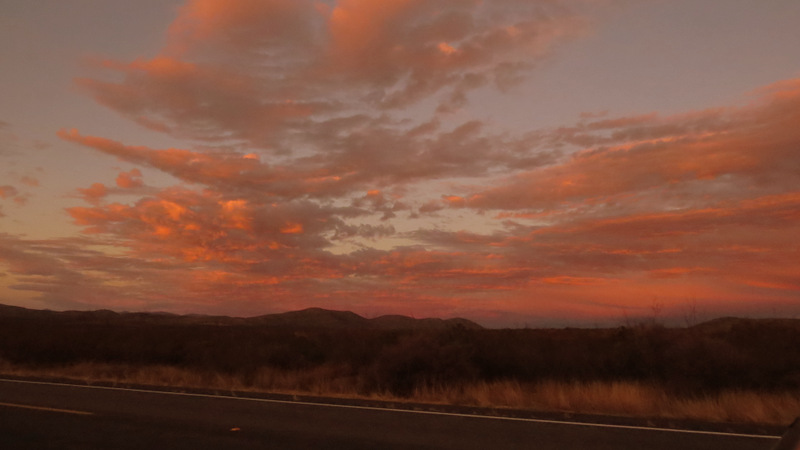
15. Sunset.

16. Wine on summer evenings with Lori and David and sometimes Alfredo (see #12) watching the sunset (see #15), sometimes seeing moonrise (see # 14), hearing the burros (see #4), or mornings with them enjoying my decaf (see#1). Chloe (see #6) often joins us. And all of this is very, very close to Mexico (see #2). (Mexico! Where I am headed on Wednesday!) 

17. My camera, which feels oddly left out of this post, and my computer, which feels well loved right now.

That’s all I can think of off the top of my head. Thank you Ann Koplow for your fabulous post this morning on your wonderful blog, The Years(s) of Living Non-Judgmentally. You inspire me daily!

What are you grateful for?

wonderful blog, The Years(s) of Living Non-Judgmentally. You inspire me daily!

What are you grateful for?

Bisbee’s Day of the Dead

Bisbee loves holidays.

The most favored is probably Halloween, but because of our proximity to Mexico and relationships with our friends just across the border, a strong runner up is Día de los Muertos, Day of the Dead.

An altar at the Bisbee Woman's Club a few days before Día de los Muertos. Photo by Carol Loy
An altar at the Bisbee Woman’s Club a few days before Día de los Muertos.
Photo by Carol Loy

This year the main celebration was at Central School Project, an old primary school turned artists cooperative. And it was fabulous.

A taco stand was set up outside Central School Project.

We were welcomed by ten-foot-tall skeletons.

Outside greeter.
Outside greeter.
Another outside greeter.
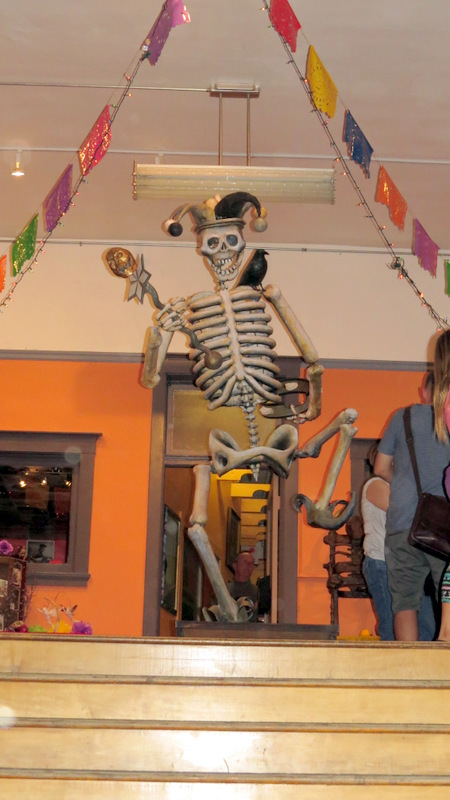
And the inside greeter at the top of the stairs.

There was quite a crowd.

crowd

There was a lot of artwork, mostly paintings and photographs.

art1

More art.

Lovers
Lovers

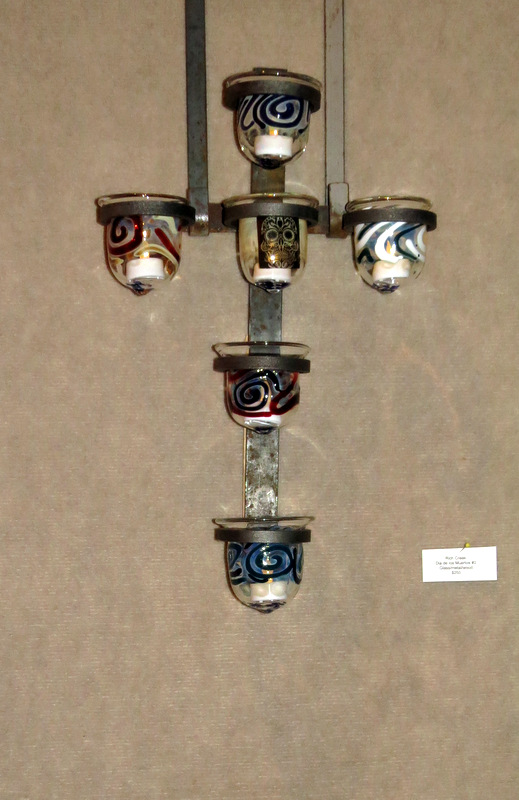
glass by Rich

And of course, there were altars to the dead.

Several of the altars were created by representatives of the Mexican Consulate in Douglas.

One of the altars by the Mexican Consulate in Douglas.
One of the altars by the Mexican Consulate.
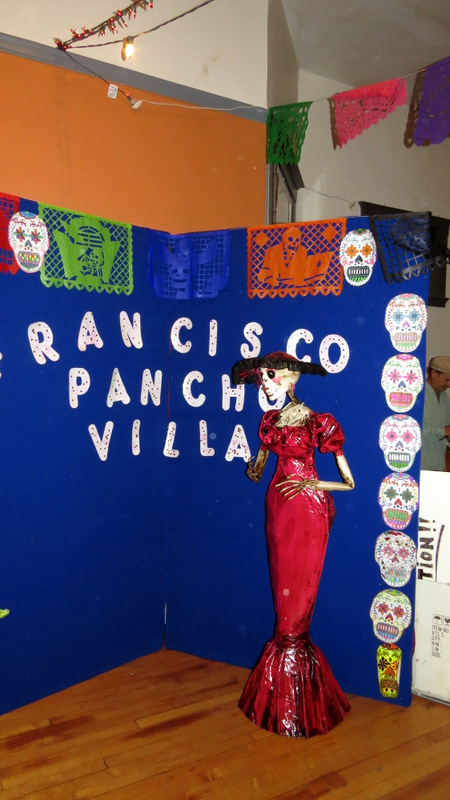
Another from the Mexican Consulate, this one to Pancho Villa.

This altar was left open for people to place dedications to loved ones. Mine was to all my animalitos.

Woman adding a message to her departed loved ones.

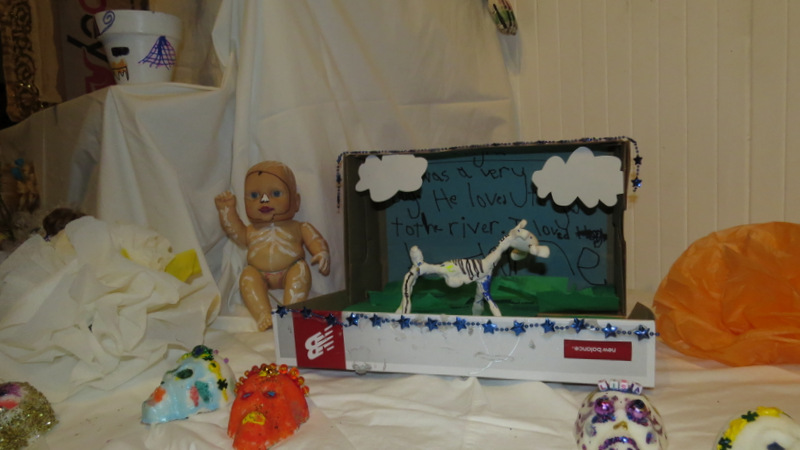
Others (unlike me) planned ahead and honored their deceased pets with altars.

To a cat.
To a cat.
To a dog.
To a dog.

birds

There were a few tables selling food and jewelry or art items.

Irene selling jewelry.
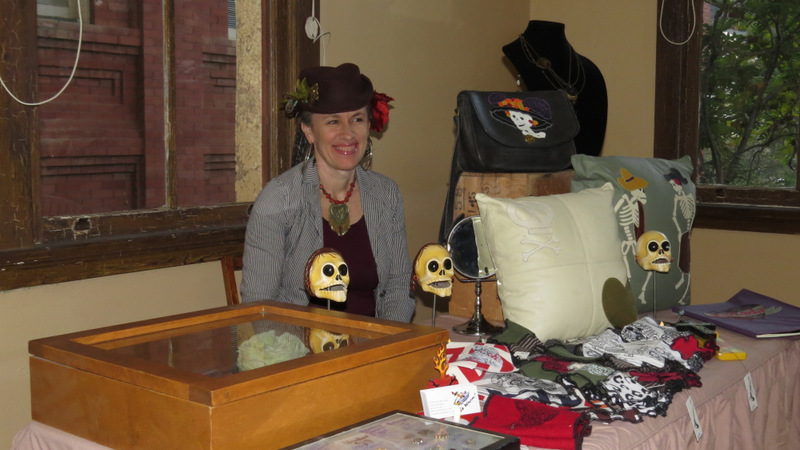
Kelly selling Día de los Muertos items.
Barbara selling pan de muertos, a special bread made for Día de los Muertos. 
Vicky sells Día de los Muertos items.

And members of the local Boys and Girls Club provided entertainment.

Kids performing. NOTE: faces are blurred a bit.
Kids performing.
NOTE: faces are blurred a bit.

And I found out that even the dead can text and take selfies!

dead text

In all, a fabuloso Día de los Muertos celebration!

Buying Ristras

When we drove south into Sonora, I had a special order for ristras, the long strings of red chiles sold in Mexico and the Southwest. One was a request from a friend and the other is actually going to be a birthday gift for another friend about to turn eighty.

Ristras of red chiles

We wound our way south of Cananea, the site of a recent mining pond spill. Soon we would hit the Rio Sonora, one of three rivers that received some of the acid spill. The sulfate acid, along with a host of heavy metals that have not yet been categorized, has killed the river, the lifeblood of the people who live along the waterway.

For the first forty or so miles, we saw no hint of the damage other than the roads being torn up due to heavy rains. It wasn’t until we drove through the Rio Bacanuci (yes, through – there are no bridges in the northern part of the Rio Sonora road) that things began to change.

Parked right alongside el rio were three large water trucks that appeared to be pumping water. At first we thought they were pumping water into local wells, but no. The workers were taking water from clean wells to distribute to towns further south that have had no safe water since the August spill.

The mine has had to send dozens of truck to pump water and deliver it to affected communities.

We stopped, took photos, and eventually asked about where we might be able to buy ristras. Just as one of the young men was explaining where to find some, a truck drove through el rio heading south.

“That’s him. He has the farm with the ristras!”

I waved down the driver of the truck and found out where his farm was. A few minutes later we were greeted by his son, Norberto, and his wife, Marisa. This young couple manages a farm on Ejido Pueblo Galera, which is close to 6200 acres in size. They share their plot with Norberto’s parents who live just across the driveway. (An ejido is land held in common by a community and sometimes farmed or used cooperatively.)

Norberto plants a portion of his farm with chiles, pecans, tomatoes, pinto beans, alfalfa, corn, peanuts, and flowers. There are also about twenty-five chickens for eggs and meat. Ah, and peaches. We left with two jars of freshly canned peaches and left them with some of our homemade burritos de carne y frijol (meat and bean burritos).

“Our land wasn’t affected by the spill,” Norberto explained. “But everyone thought it was, so the mine actually compensated us for our damaged reputation.”

They even had the main Sonoran newspaper, El Imparcial, print a story about the spill which included information about how the water in Pueblo Galera hadn’t been affected.

Unfortunately, though, the heavy rains destroyed more than half their crops. “This deep!” said Norberto, holding his hand about five feet off the floor. “That’s how high the water was. We could see only the top of our corn.”

Norberto and Marisa’s house sits on the east side of the road. All the crops planted to their east were flooded, but the crops on the west side of the road were spared.

They were able to harvest chiles from the west side, and when we stopped for ristras, Marisa was busy drying chiles and grinding them into chile powder, a three-step grinding process.

First the chiles are dried outside
First the chiles are dried outside, on the roof of a shed.

First Marisa pounds the chiles which bruises them a bit and loosens the seeds.

Chiles are in a bucket, waiting to be
Chiles are in a bucket, waiting to be pounded.

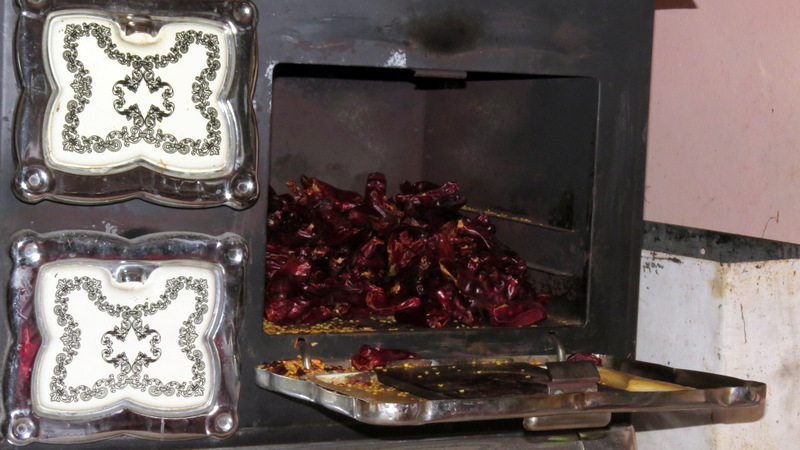
Then she slowly dries them in her oven and finally grinds them three times, first coarsely, then finer, and then finer still. Finally the powder is bagged.

Chiles drying in the ove
Chiles drying in the oven
Marisa grinding chiles.

After watching this process for a while, we got the tour of the portion of the property still in production. We crossed the highway and slipped through a V-shaped entrance through the fence into to their field.

This little V entrance to the field keeps ca
This little V entrance to the field keeps cattle out.

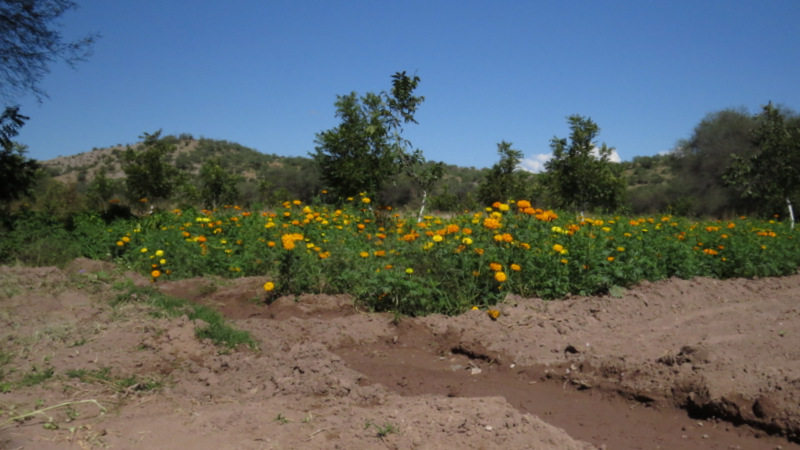
Most of what is left in the field is marigolds which are about to be picked and sold for Dia de los Muertos, coming up in just under two weeks.

Marigolds for Dia de los Muertos.

Norberto was proud of the fact that he uses no pesticides. He mixes the plants in his fields to help protect them from predators. It was a delight looking out across the organic field buzzing with honeybees and nearly blanketed in about eight varieties of butterfly.

Finally, it was time to choose the ristras and leave. Norberto chose the two that would travel the best and carefully placed them in my car. We left to Norberto and Marisa waving goodbye as we drove off, south to Banámichi, the smell of chiles wafting through the car.

The Letter

Yesterday I attended my freewriting group. I should do this more than once every eight or ten weeks!

We were give the first sentence and had ten minutes to write. Here’s what I ended up with.

It all started after she sent the letter.

Cindy wrote a letter to her boyfriend’s mother. She spoke a little Spanish, but his mother spoke no English at all, hence the attempt to compose in Spanish. It was a desperate attempt to please a woman long-known for rejecting her only son’s – her only child’s – girlfriends. None were good enough for Salvador.

“Querida María Jesus,” she began. Cindy was attempting to say she was sorry for not inviting her for a visit sooner. They had just moved to a new house and it was quite large and they still needed furniture.

“Soy muy embarazada,” she had written. And no, this does not mean she is very embarrassed. It means she is very pregnant.

And she didn’t describe the house as large and needing furniture. She had said she was quite large and needed furniture.

For the baby, thought María Jesus as she read the letter two days later. My first grandchild! Ai! And I haven’t even approved this woman! And she is having a baby without being married to my Salvador!

María Jesus began to pack immediately. The she paused, called her friend Elena at JC Penney, and ordered a room full of baby furniture to be delivered muy pronto.

Early the next morning, María Jesus lumbered aboard the Amtrak bound for Fresno. She told everyone aboard about her expected grandchild. By the end of the six-hour journey, it was a grandson, due tomorrow. And it was going to be a Cesarian delivery. And María Jesus had to get there today because Cindy (was that her name?) refused to have the operation without her almost mother-in-law’s presence.

Both María Jesus and the baby furniture arrived on Cindy and Salvador’s doorstep at 4:30.

Fried Green Tomatoes

On cool Sunday mornings of late summer, my father, always an early riser, would slide quietly out of bed, pull on his stay-at-home clothes, and go to the kitchen to measure coffee into the stovetop coffee percolator.

I am also an early riser, so soon I’d be in the kitchen with him stirring Bosco chocolate into a tall glass of milk, spoon clinking against the sides, frothing tiny bubbbles at the top. We’d sit at the table in silence, looking out the window at patches of flowers, wild blackberries, and tended gardens.

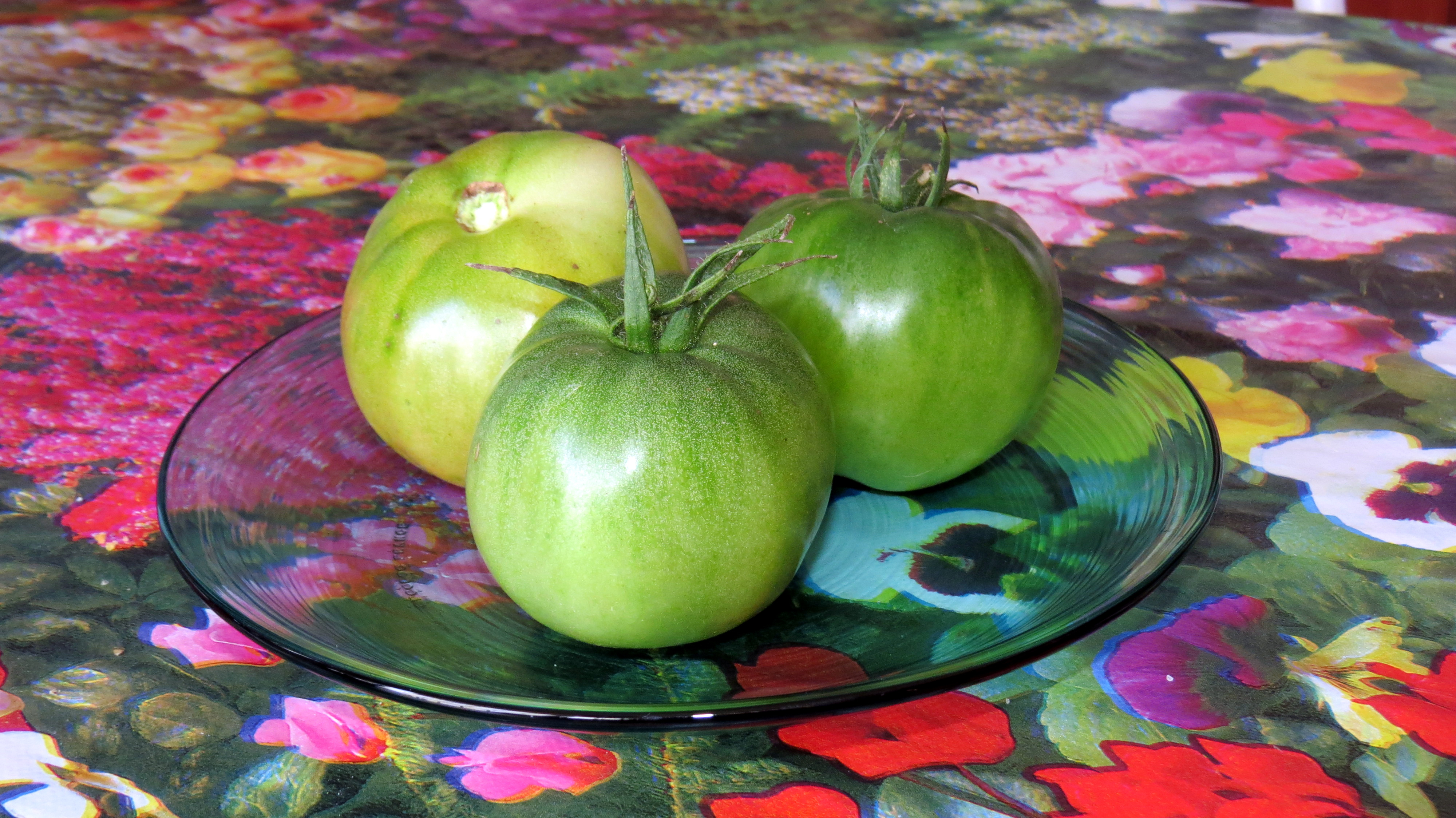
“Why don’t you go out and find some good frying tomatoes,” he’d say, and out I’d go to wander the rows with a small worn Easter basker, to gather the largest, firm green tomatoes I could find.

IMG_6280

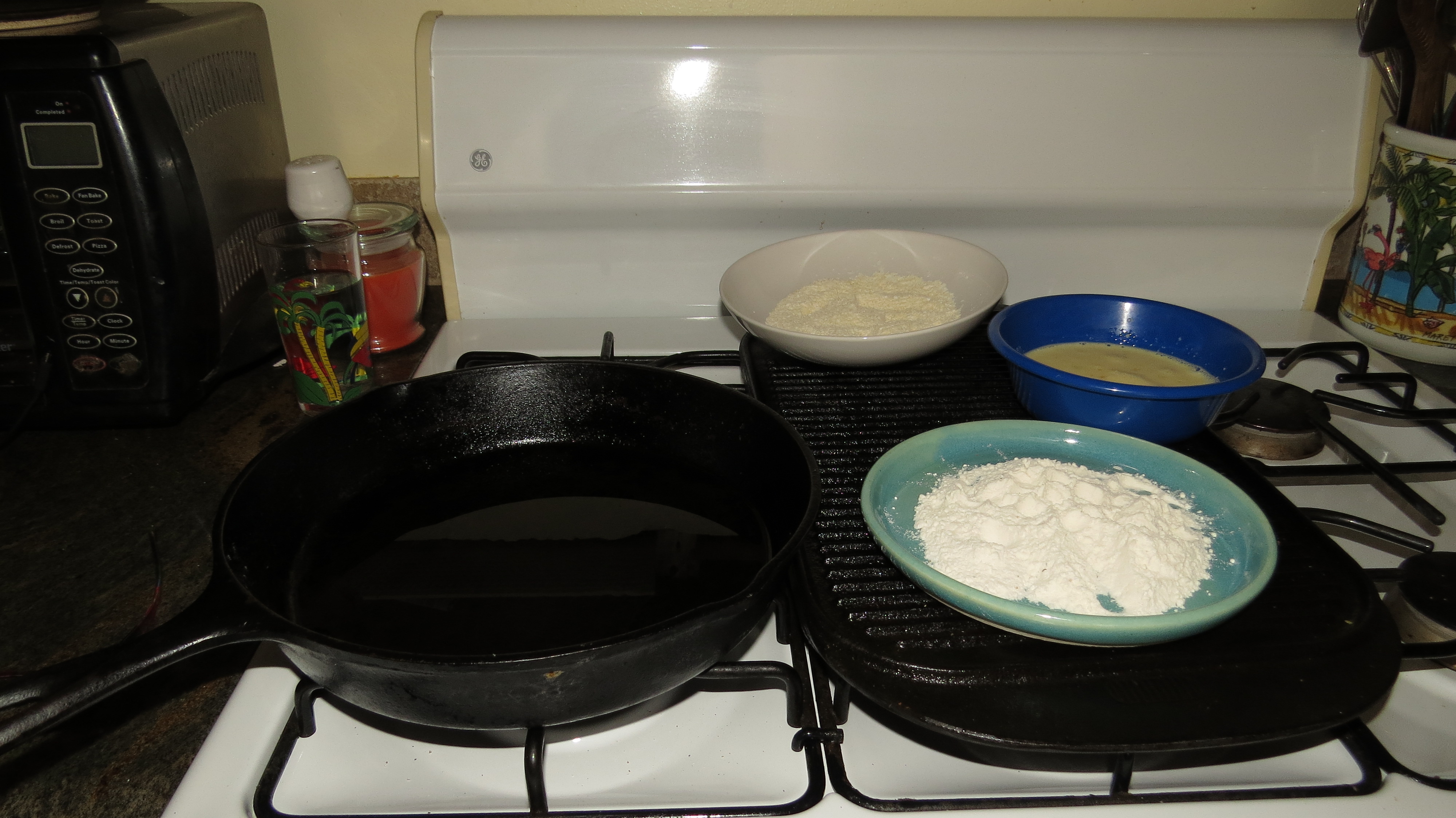
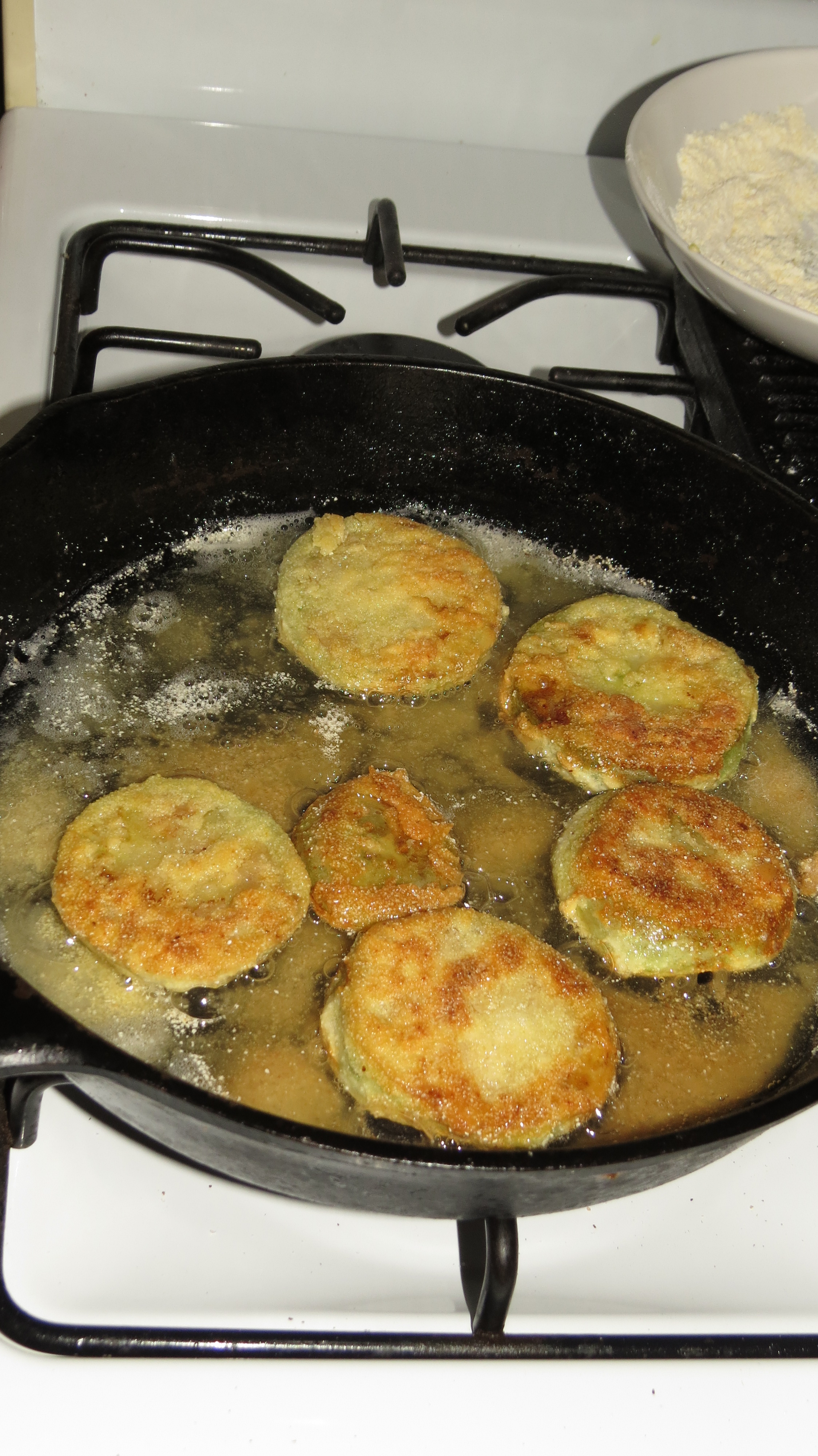
When the basket was full, I’d carry it into the kitchen, place it on the counter, and quickly rinse and dry the fruits. Dad had the frying pan out, its bottom covered with oil, with a bowl of beaten eggs and a platter of spiced flour. He’d pull out the sharpest knife and cut the tomatoes into thick slabs and begin the frying process.

IMG_6323

Flour, egg dunk, flour, fry.

IMG_6325

No matter how full a basket I’d brought in, the two of us could eat most of the fried green tomatoes before my mother and sister rose. Though to be honest, I’d usually bring in only two or three tomatoes.

IMG_6327

IMG_6328

Last bite.
Last bite.

Addendum 1: My sister says she didn’t remember this. That’s because we always polished off all the tomatoes before she got up!

Addendum 2: Many thanks to Lori and David for the green tomatoes!

Los Basueros

In 1990 I was part of a delegation to Guatemala to learn first-hand of human rights abuses and to hear the stories of the people. It was one of the most powerful experiences of my life.

The east and north sides of the dump slope gently into a deep pit where the city’s garbage lies. Along the east side, away from the path of bulldozers, is a cluster of about thirty houses where the basueros, or dump people, live.

The houses were scrapped together with chunks of wood, tin and plastic, held together with baling wire. Cardboard or blankets served as doors. Most had a window, and some of those windows had a scrap of cloth hanging over the opening.

A few houses had potted plants, flowers, or a small yard fenced to contain chickens or a pig. One woman grew corn and had a mango tree.

To live with such hope, such grace, on the edge of the Guatemala City dump twisted my brain like nothing I’d ever seen before.

Buzzards circled overhead as bulldozers roared across the pit, pushing the garbage and sludge toward the center of the dump. Children dodged the dozers and trudged up the hill and past us, dragging flats of cardboard loaded with plastic, tin, or food they’d salvaged.

Garbage trucks dumped their contents over the edge on the far side. The basueros working below ran at the last minute to avoid the shower of trash, then scrambled back again to begin searching the latest load.

Our guide had led us to the houses, single file, down a trail made slippery by recent rain. That same rain had turned the dirt floors in these houses to an inch of mud.

We stopped at a house, bright pink fabric in the window, and a woman stepped out. She was old, or perhaps her life had made her look much older than her years. She wore a loose, worn dress topped with an even more worn apron. She was barefoot. She waved us into her house, and our group of fifteen completely filled it.

The tiny single room served as living room, kitchen and bedroom to her family of seven. It was especially difficult there during the rainy season, she explained, because water ran through the house much of the time. On occasion a mud slide would carry a foot of mud into her home. It was a hard life as a basuero, she told us, but it was better than living on the streets.

She told us with pride that she had built this house herself and that her children were not hungry. Her family specialized in collecting tin which they carried into town two times weekly to sell as scrap.

We left her, complimenting her on her skills, and continued our walk down the soggy trail along the edge of the dump, pausing occasionally to hear someone’s story. Not many people were home – they were all in the bottom of the dump or dragging their finds to their homes. No time to talk.

The only others we were able to speak with were two men who looked to be in their fifties. They were building a casket of scrap wood. Just the day before, a three-year-old girl had been run over by one of the dozers. It wasn’t until we’d left that I wondered where the child would be buried.

White Privilege

Have you ever been stopped by the police or sheriff while walking or driving? I have. I was going a little too fast. Once, I made an illegal u-turn. Other than that, I’ve made it through over forty years of driving without being stopped.

And I have certainly never been stopped because I was female and white.

You know where this is leading.

Since the events in Ferguson MO, I have been – again – doing a lot of thinking and reading about race. How can we not?

But most of us don’t go very deep.

I was raised with what today is called “white privilege.” I don’t know what it was called back when I was being raised with it. It probably wasn’t yet called anything.

I didn’t know I had white privilege. It was easy to not know this because other than two families who had slightly darker skin than my family did, everyone in my neighborhood, everyone in my school, in fact, looked just like me. It was simply “normal” to have light skin, a dad with a good job, and a mom who was a housewife.

in high school, I got to know a few minorities. However, it wasn’t until after graduation that I understood that every single one of the black students lived, literally, on the other side of the tracks. It wasn’t until after graduation that I learned about the swimming pool in the basement of the high school that had been closed down because “the Colored” wanted to swim there, too.

So what does it mean to have white privilege?

For one, it means I don’t have to worry about being pulled over for some obscure reason when I’m driving. And if by some chance I am, I have no fear of being shot. Even if I question the officer’s motives in stopping me, said officer might get a bit testy, but I won’t have a gun pulled on me. I won’t get shot.

I know far too many young black men who have been pulled over – repeatedly – for daring to drive down our county roads. In broad daylight. At night, they’re pulled over and the office approaches, hand on gun. These are young men who live here. They must be sick of it. I would be.

White privilege means that if I chose to, I could purchase a rifle, sling it over my shoulder, and walk through the local grocery store.

I don’t know a single person who is not white who could pull that one off. In fact, just a few weeks ago, a young Black man was in Walmart. He picked up a pellet gun in the toy department. A customer saw him with the gun and dialed 9-1-1. He never had the chance to set the gun down before the police shot him. Can you imagine a young white man being shot for picking up a pellet gun? Can you imagine someone even dialing 9-1-1?

No once crosses the street because she is afraid I’ll grab her purse. And if I did grab that purse, it’s not likely I’d get shot while running away.

No one follows me through a department store, fearful I’ll be shoplifting. I had a white girlfriend in college who shoplifted and no one ever gave it a thought when she went into a store. My black friends were closely watched.

Over $400,000 has been collected to support the policeman who shot Michael Brown – before he’s even been charged with anything. And some of the donors have made such racist, hateful statements that it is shocking, even to me, one who has heard quite a bit.

I am not sure what we do about this except to speak out. Over and over, Black youth – and adults – are gunned down before they can even explain what they’re doing. Remember Renisha McBride? She was in a car accident and her cell phone was dead. She knocked on a door and when no one answered, turned around to leave. That’s when she was shot by the homeowner.

We all, whatever our race and whatever our privilege or lack of privilege may be, must speak against the madness of assuming that Black = dangerous. We need to all stand together on this. Letters to the editor. Attend rallies in each other’s neighborhoods. Cross the race barrier.

I marched for equality in the 1960s. It saddens me, sickens me, that I have to do it still today.

Dancing Woman

A few weeks ago I went to a writing group I occasionally attend. One of the prompts was a drawing of a woman with wings. She appeared to be dancing. Here’s what came from that prompt.

08 August 2014

She dances to a rhythm only she can hear.

When she first started dancing, nearly forty years ago, she had no wings.

But it was, and still is, often said that she dances as an angel might, her long skirts flowing and twirling.

She dances at home. She dances in the streets. She dances her way into church and she dances in the Safeway while choosing frozen peas.

I believe she dances through her dreams each night. I believe she dances her dreams each day.

About fifteen years ago, she found a lump. Rather, she found two. She eventually danced her way to the doctor’s office where she was referred to a specialist, and then danced her way there.

She paused in her dancing through the biopsy and danced up a storm when she was told the lumps were not cancerous. She danced as she told the doctor she’d live with the lumps.

But the lumps grew. And within a few months they’d sprouted tiny downy feathers. She danced her delight.

By the end of that year, the downy feathers had become tiny wings.

She danced to Chavella’s house to get her dresses altered to accommodate the wings.

Each year the wings have grown, and each year she gets her clothing altered to accommodate the size.

She says she will dance on her own grave.

Pieces of Lives

I wrote this in July 2000.

It was only 9 am, but my face glowed red in the desert heat. Sweat ran into my eyes. Arms were slathered in SPF 25 yet they’d turned pink. I’d drunk close to half a gallon of water in the hour I’d been out there. I’m part of a group who volunteers weekly to pick up trash that migrants heading to El Norte have left on ranchers’ lands. What I was finding, however, were pieces of lives.

Near a small campsite, I found two small plastic packs. One was black, a woman’s. It held a little food that had gone bad, part of a roll of toilet paper, and two maxi pads in their pink wrappers. I wondered how desperate a woman, or any person, must be to try crossing this desert on foot. How desperate would I have to be?

Newspapers report cut fences and land strewn with dirty diapers and water jugs, but what I’ve seen has not matched what I’ve read. To be sure, our group has found hundreds of water jugs which we cart off to recycle. But we’ve also found car batteries, an old sofa, a refrigerator, and a car bumper. We haven’t seen a single diaper in the weeks we’ve come out and haven’t seen any fences cut.

Reaching for my water again, I wondered only why there weren’t more abandoned containers. The heat had already convinced me to quit for the day, so I couldn’t conceive of spending days, even weeks, pushing through mesquite, walking dry washes, and evading La Migra. How is it that the desert heat has killed only sixteen of those who’ve passed through here in the last few months? If I’d been one of the migrants, it’s likely I’d be one of the dead.

Poverty can force a person to push scant belongings into a small pack, string a gallon of water on a rope, and say goodbye to friends and family. To head off into a land of thorns, venomous snakes, and terrible heat with no lakes or rivers. How must it look to those from the rain forests of the south?

in addition to all the dangers of the land, there are men with binoculars and rifles searching for those brave enough to cross the area by foot.

The money migrants pay for assistance in crossing guarantees nothing. In exchange for money, migrants get promises laced with lies; they get led through the desert without enough water or food; they get packed into cars and vans with poor brakes and tires. If spotted by the men with rifles, they are abandoned by the ones they’d paid to guide them. Some are left alone to die.

I looked at the small collection of things I’d decided, for reasons I don’t understand, to keep. I have a green ball cap from the 1996 Super Bowl; a yellow bandana; a blue toothbrush; thin white socks tucked neatly into a pair of tennis shoes; the identity card of man from southern Chihuahua; diarrhea medication. Pieces of lives

Camping

Camping! Time to take the Aliner to the lake.

Cinda came over and we popped her up easily. The inside was quite dusty, but then as we cleaned it out we found the camper had been leaking. Thankfully, no mold. We got the insides all cleaned out and were ready for the next part.

Keys. Well, the keys were on the key rack hanging inside the back door. But then the wall was sheet rocked, and I have no idea where the workers put the key rack. Or the keys. And I am not able to find out.

I called the neighborhood locksmith. Retired. No idea who else might give it a try. I called area trailer parts places and they referred me to Aliner. I wrote to Aliner on their secure website. They no longer make the lockset and referred me to a local RV Center. This could go round and round.

So we can’t lock the trailer up. Okay. We’ll live with that. Anything valuable gets locked in the car.

Next, the front, by the hitch, has a retractable wheel that can be lowered to move the trailer around. The wheel is removable and the retractable part is used to stabilize the trailer. There is a piece of metal used to join the two pieces. That metal tube was missing.

Trini, the amazing man who works for me sometimes, found a piece of metal – not the original piece – and made it work. Hooray!

Get the little triangular levelers to put under each corner? Check. Long mirrors to attach to the car so I can see around the Aliner? Check.

Put the tow bar in and move her into place! Woo!!!

Tow bar? Where’s the tow bar?

I last used it a few months ago to tow a junk trailer to the yard to fix up and use to haul things away from here (big trash, broken washing machine, etc.) Now, just where did the tow bar go after that? I cannot recall, nor can my partner. We both remembered seeing it certain places, and Trini and I have  looked everywhere. No tow bar.

Clearly it is somewhere. Make that Somewhere with a capital S. But exactly where is, at this point, a mystery.

So instead of camping tomorrow, Cinda and another friend are coming and we’re emptying the carport and getting rid of stuff.

Woo! Carport cleaning!

Addendum: tow bar was found during the carport cleaning. Camping soon!